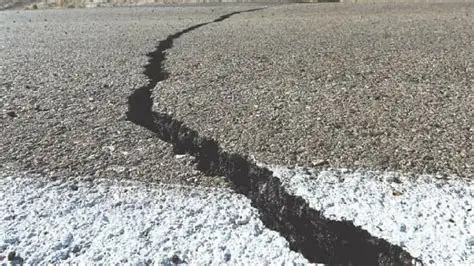
The Minister for Lands and Natural Resources, Hon. Emmanuel Armah-Kofi Buah, has announced a series of urgent policy measures aimed at strengthening Ghana’s preparedness for earthquakes, warning that the country cannot afford to ignore its growing seismic risks.
Speaking at the launch of an initiative to improve seismic monitoring and disaster preparedness, the Minister said the programme represents more than a technical upgrade, describing it as a demonstration of the government’s commitment to protecting lives, property and critical national infrastructure.
He noted that Ghana’s seismic vulnerability is particularly pronounced in the Greater Accra and Eastern Regions, which lie within active tectonic zones associated with the Akwapim Fault System and the Coastal Boundary Fault Zone.
According to the Minister, several strategic national assets, including the Tema Harbour, Kotoka International Airport and major industrial facilities, are situated on or near these fault systems, making earthquake preparedness a matter of national importance.
Hon. Armah-Kofi Buah recalled the country’s history of destructive earthquakes, including those recorded in 1636, 1862, 1902 and the devastating 1939 Accra earthquake, estimated at a magnitude of 6.5, which remains Ghana’s most significant natural disaster.
He cautioned that rapid urbanisation, the proliferation of informal settlements and weak enforcement of planning regulations could significantly worsen the impact of any future earthquake, particularly in the Greater Accra Region, which is home to more than four million people and serves as the nation’s administrative and economic centre.
The Minister also highlighted the risks facing Ghana’s mining and natural resources sector, explaining that mining infrastructure, tailings storage facilities, mineral processing plants and energy installations especially in the Eastern and Western Regions must be designed to withstand seismic forces.
He warned that earthquakes affecting mining areas could lead to tailings dam failures, slope collapses, underground structural damage and severe environmental and human consequences.
Addressing existing regulatory gaps, Hon. Armah-Kofi Buah observed that Ghana currently lacks a comprehensive and enforceable legal framework dedicated specifically to seismic risk management.
He said many buildings remain vulnerable because existing regulations are fragmented and enforcement of the Ghana Building Code has often been inadequate.
To address these challenges, the Minister announced four key policy priorities: mandatory seismic assessments for building permit applications in high-risk areas; annual structural audits and retrofitting of critical infrastructure such as schools, hospitals, ports and airports; strict enforcement of the Ghana Building Code with enhanced seismic performance standards; and continuous seismic monitoring supported by sustained public education campaigns.
He stressed that the measures would be rigorously enforced as part of the government’s broader strategy to improve disaster resilience, insisting that Ghana must act now rather than wait for another catastrophic earthquake before taking decisive action.
Story By: Sheila Obaapa Naana Frimpomaa