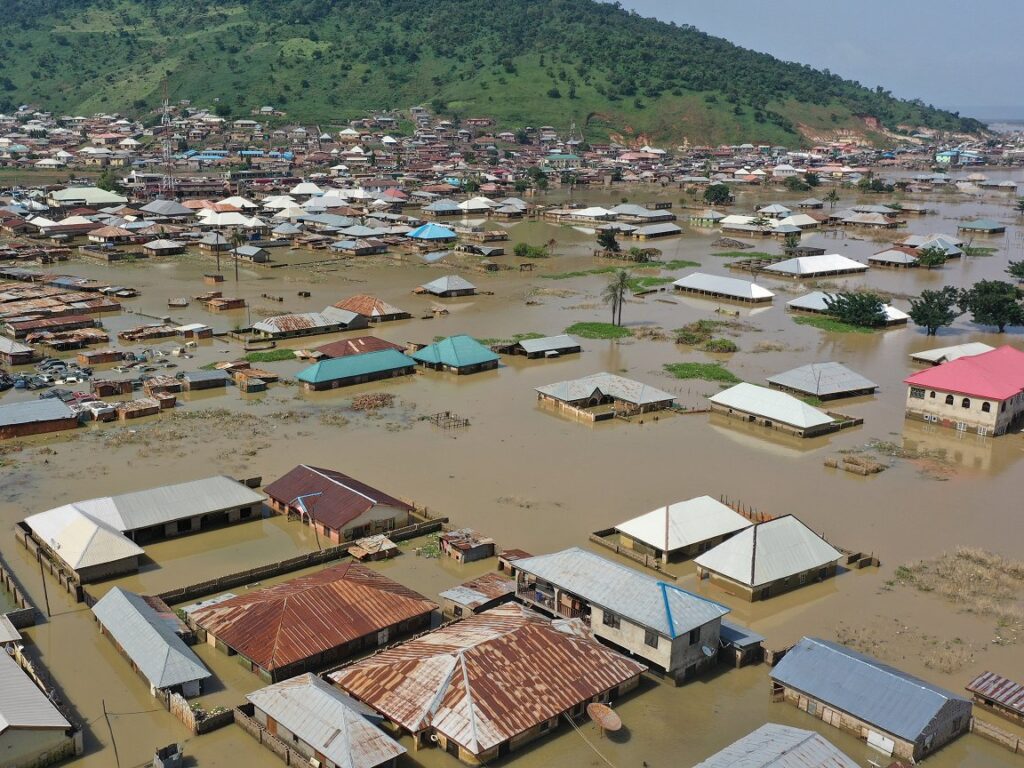
Recurring flooding in communities surrounding Ghana’s Weija Dam has reignited debate over the growing impact of unplanned urban development and weak environmental enforcement across many African cities including Ghana and Accra.
While some residents have blamed recent flooding on the controlled spillage of the Weija Dam following heavy rains, officials of Ghana Water Ltd. (GWL) argue that the disaster is primarily the result of human encroachment on waterways, floodplains, and protected buffer zones.
Speaking on a local current affairs programme, the Director of Communications at Ghana Water Ltd., Stanley Martey, stressed that the flooding reflects a wider challenge confronting many African urban centres, where rapid population growth often outpaces planning regulations and environmental protection measures.
According to him, the affected areas around Weija have long been recognised as flood-prone zones, with recent heavy rainfall merely exposing existing vulnerabilities.
“The current devastation we are seeing is not caused by the controlled release of excess water from the dam. These communities are already vulnerable to flooding, and the recent intense rainfall has worsened the situation,” he explained.
Martey pointed to widespread unauthorised construction in waterways and drainage corridors as a major contributor to the crisis. He noted that despite repeated warnings from authorities, some residents continue to build on natural water channels, obstructing drainage systems and increasing flood risks.
Across Africa, experts have increasingly linked urban flooding to poor land-use planning, inadequate drainage infrastructure, environmental degradation, and climate change-induced extreme weather events. Cities from Accra and Lagos to Nairobi and Johannesburg have all experienced devastating floods in recent years, exposing weaknesses in urban resilience systems.
Martey expressed concern over what he described as inadequate enforcement by local authorities, arguing that illegal developments continue to flourish because planning regulations are often not effectively implemented.
He further defended the dam’s operational procedures, explaining that controlled spillage is an internationally recognised safety measure designed to protect the structural integrity of dams and prevent catastrophic failures.
“If excess water is not released when necessary, the consequences of a dam failure could be far more devastating than the flooding currently being experienced,” he cautioned.
The Ghana Water Ltd. official disclosed that the Weija Dam has been spilling excess water since April 2025 due to sustained inflows from the Densu River Basin, whose headwaters originate in the Atiwa Forest. Ongoing rainfall upstream continues to affect water levels, making it difficult to predict when the spillage will end.
The situation underscores the growing need for African governments, city authorities, and environmental agencies to strengthen climate adaptation measures, enforce zoning regulations, protect wetlands and waterways, and invest in resilient urban infrastructure.
Martey called for coordinated action, including the evacuation of residents living in high-risk zones, the demolition of illegal structures obstructing waterways, the dredging of drainage channels, and the restoration of natural buffer zones around rivers and reservoirs.
As climate change increases the frequency and intensity of extreme rainfall events across the continent, experts warn that flood management can no longer be treated solely as an emergency response issue. Instead, it must become a central component of Africa’s urban planning, environmental governance, and climate resilience agenda.