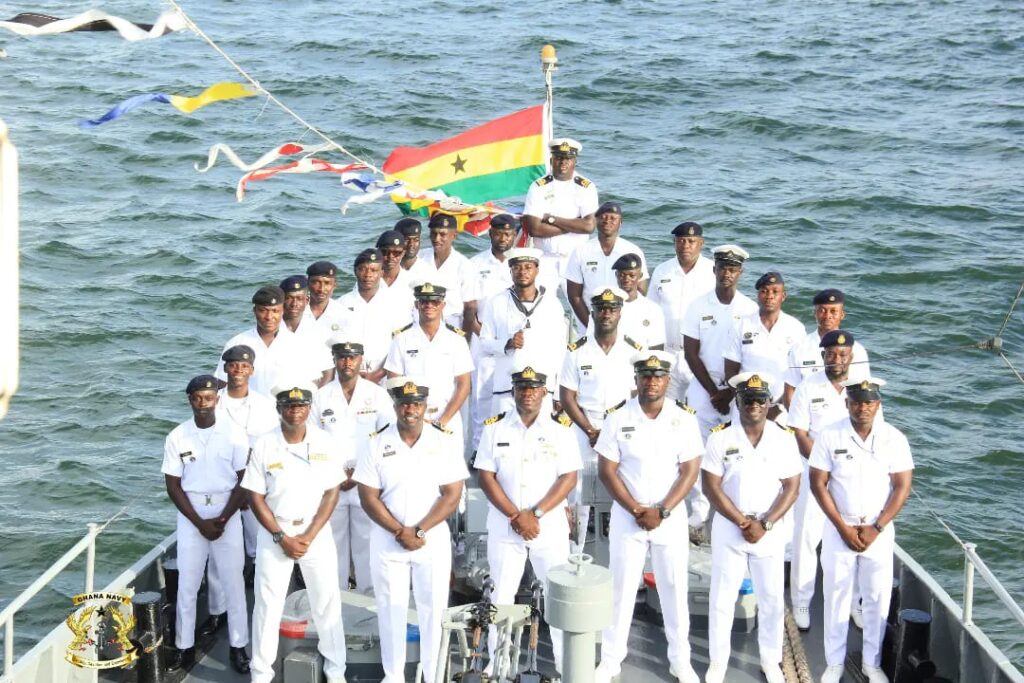
The Ghana Navy has disrupted a large-scale illegal fuel bunkering operation along the Keta–Denu–Aflao coastline in the Volta Region, intercepting seven specially modified canoes during an intelligence-led maritime patrol.
The operation, conducted at midnight on Monday, 12 January 2026, was executed by personnel aboard a Ghana Navy Ship (GNS) under the Eastern Naval Command (ENC). The interception followed sustained surveillance and actionable intelligence on suspected illicit maritime activity in the area.
Addressing the media at the ENC headquarters on Thursday, 15 January 2026, the Flag Officer Commanding the Eastern Naval Command, Commodore Solomon Asiedu-Larbi, said the intercepted vessels were locally fabricated canoes, commonly referred to as “Dendes,” and were purpose-built for fuel smuggling at sea.
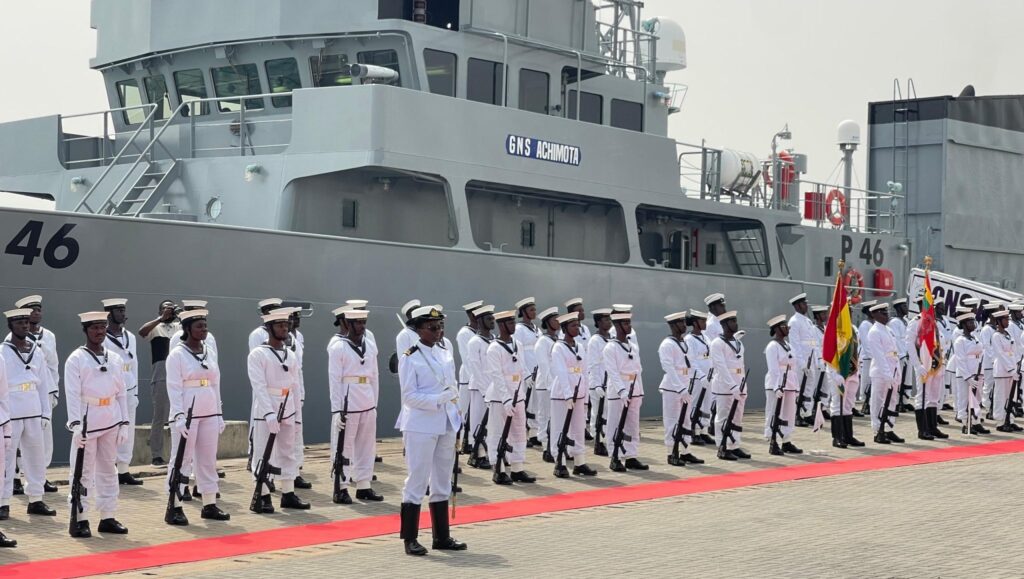
According to Commodore Asiedu-Larbi, the canoes were found with approximately 378 empty barrels, a clear indication of their intended use for illegal fuel bunkering operations. He stressed that the design and capacity of the vessels underscored a well-organised and deliberate attempt to circumvent maritime and petroleum regulations.
“The modification of these canoes demonstrates the evolving tactics of fuel smugglers and the level of sophistication involved in illegal bunkering activities within our maritime domain,” he noted.
He reaffirmed the Ghana Navy’s commitment to protecting the country’s territorial waters, safeguarding maritime resources, and supporting national efforts to curb fuel smuggling, piracy, and other transnational maritime crimes.
The intercepted vessels and seized items have been secured for further investigation, while intelligence-led operations along Ghana’s coastline will be intensified to dismantle networks involved in illicit fuel trade.
The Navy urged coastal communities to cooperate with security agencies by providing timely information to help combat illegal activities that undermine national revenue, maritime safety, and economic stability.
Source: www.maritimafrica.com