Growing opposition is emerging against government plans to introduce Private Sector Participation (PSP) in the operations of the Electricity Company of Ghana (ECG), with critics warning that the move could undermine national control over a strategic public asset and worsen electricity tariffs.
Labour groups, civil society organisations, and sections of the public have raised concerns that the proposed arrangement may lead to job losses, reduced accountability, and higher costs for consumers. They argue that ECG’s challenges can be addressed through internal reforms rather than handing operational control to private entities.
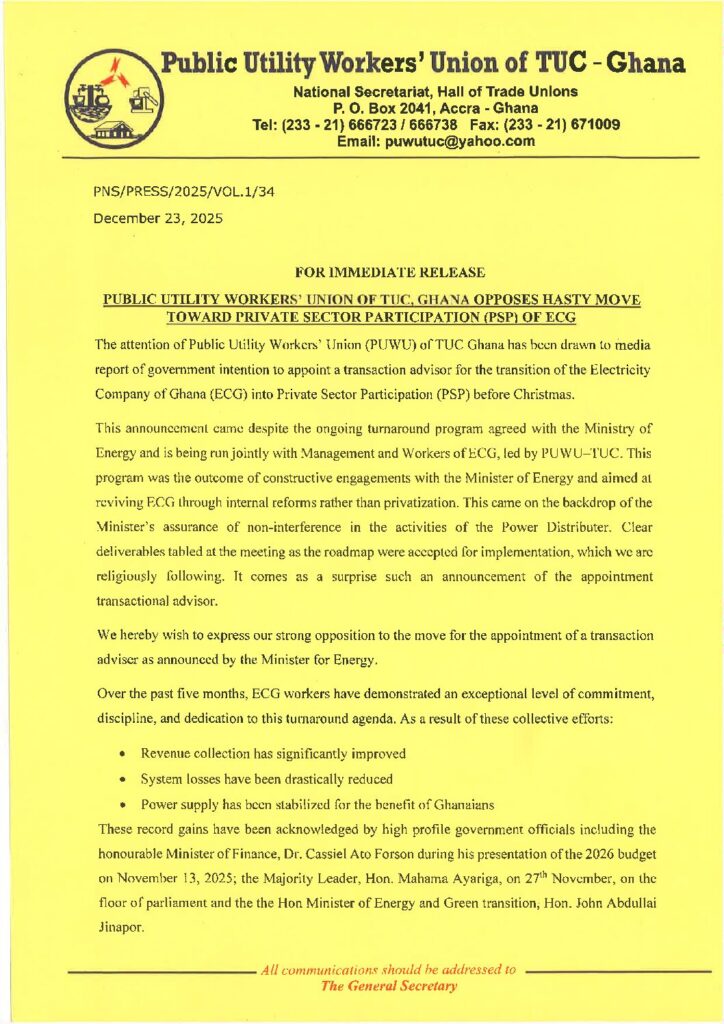
According to opponents of the plan, past experiences with similar arrangements in the power sector have produced mixed results, with some private operators failing to meet performance expectations while placing financial burdens on the state. They caution that repeating such models without clear safeguards could expose ECG to further instability.
The groups are calling on government to prioritise strengthening ECG’s management, improving revenue collection, and tackling system losses instead of pursuing PSP. They insist that with adequate investment, political will, and professional leadership, the power distributor can be made efficient without private sector control.
They have also urged authorities to engage in broader stakeholder consultations, including workers and consumer groups, before taking any final decision. Transparency in the process, they say, is critical to maintaining public trust and ensuring that any reforms serve the national interest.
Meanwhile, government has maintained that private sector involvement could bring efficiency, reduce losses, and improve service delivery. Officials argue that the proposed model does not amount to a sale of ECG but rather a partnership aimed at improving operational performance.
As the debate continues, analysts say the future of ECG will depend on how well government balances efficiency goals with public accountability, job security, and consumer protection in Ghana’s energy sector.