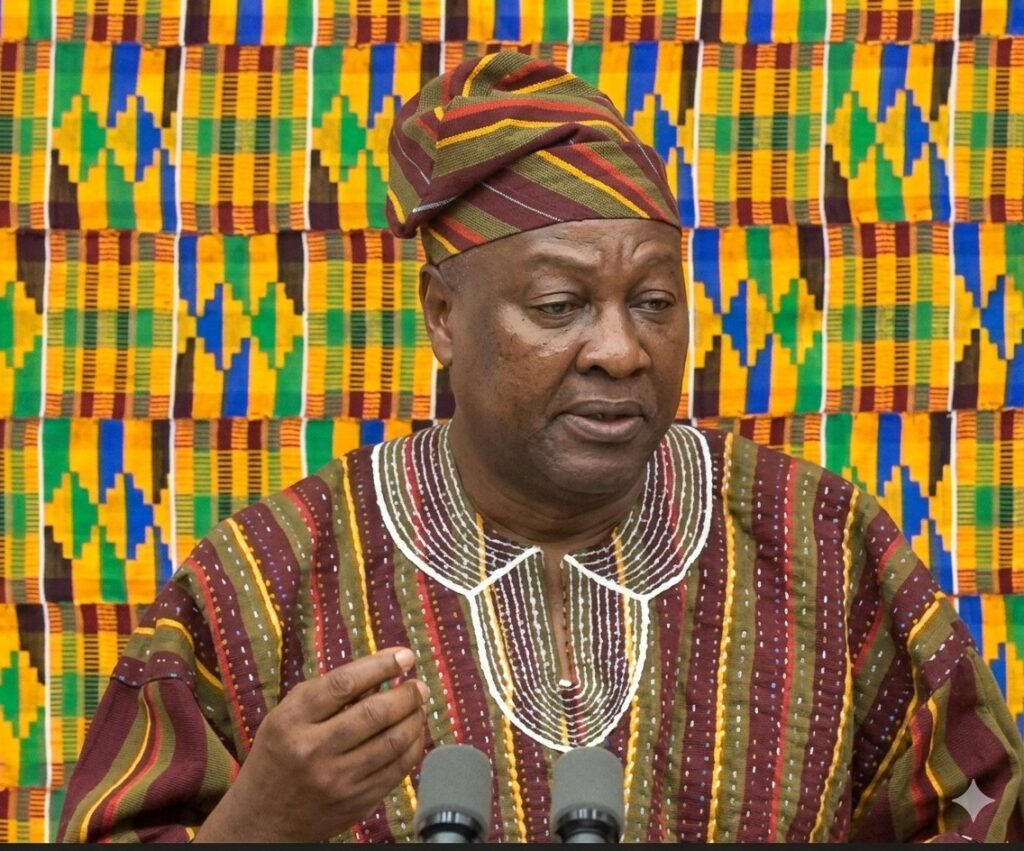
President John Dramani Mahama has rejected arguments that historical events such as slavery should be judged based on the social norms of the past, describing such claims as “loud and wrong.”
According to him, the transatlantic slave trade, which involved the forced removal of Africans from their homeland to work as slaves abroad, was a crime against humanity that must be recognised and addressed.
Speaking at UN Event on Reparatory Justice
President Mahama made these remarks while speaking at a High-Level Special Event on Reparatory Justice held at the United Nations Headquarters on Tuesday, March 24. The event was themed “Reparatory Justice for the Trafficking of Enslaved Africans and the Racialised Chattel Enslavement of Africans.”
His speech comes at a time when there is growing international advocacy for reparations and global recognition of the long-term effects of slavery on African countries and people in the diaspora.
“Slavery Was Wrong Then and Now”
During his address, Mahama stressed that slavery was morally wrong regardless of the period in history in which it occurred.
“People will sometimes put a disclaimer to say that you cannot use the social norms to judge the actions and events that took place in the past. Well, such people are loud and wrong,” he said.
“Just because everybody is doing something doesn’t make it right. Slavery is wrong now, and it was wrong then.”
He further noted that although Africans were enslaved throughout history, there were always individuals and groups who opposed the practice, including abolitionists who fought against slavery and injustice.
System Designed to Deny Africans Their Humanity
President Mahama also stated that the entire transatlantic slave trade system was designed to deny African people their humanity and dignity.
According to him, the system was built on a racial hierarchy that placed whiteness above blackness, despite having no scientific or factual basis.
He stressed that recognising slavery as a crime is an important step toward reparatory justice and addressing the historical injustices and long-term economic and social effects of slavery on African people and their descendants.
The issue of reparations for slavery continues to gain global attention, with African leaders and advocacy groups calling for formal acknowledgment, apology, and compensation for the historical injustices suffered by Africans and people of African descent around the world.