
The expectation that Osahene Alexander Kwamena Afenyo-Markin, as Minority Leader of Parliament, should publicly declare support for a particular aspirant during his party’s presidential primaries misunderstands both the nature of his office and the strategic discipline required of parliamentary leadership. Silence, in this context, was not evasion; it was responsibility.

First, the Minority Leader occupies an institutional, not factional, position. His primary mandate is to lead and coordinate a parliamentary caucus made up of members with diverse loyalties, ambitions, and internal party preferences. A public endorsement in a competitive primary would have risked fracturing caucus cohesion, subtly privileging one camp over others and weakening the collective authority he must exercise on behalf of all minority MPs. Leadership at that level demands neutrality during internal contests, not partisanship within the party.
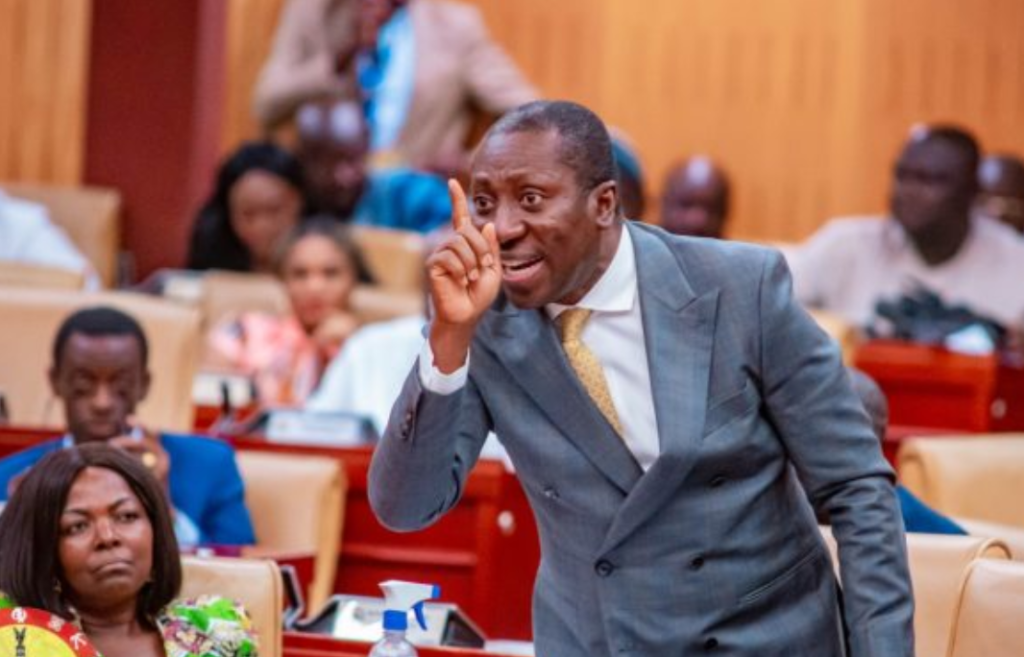
Second, parliamentary leadership and presidential primaries serve different political functions. The primaries are about selecting a flagbearer; the Minority Leader’s role is about holding the government to account, shaping legislation, and articulating an alternative national agenda. Conflating these roles would have distracted from parliamentary work and exposed the Minority Leader’s office to avoidable political crossfire. By staying above the fray, Afenyo-Markin preserved the clarity of his institutional focus.
Third, there is a strategic dimension that critics conveniently ignore. A premature endorsement can become a political liability once the primaries conclude. If the endorsed candidate loses, the Minority Leader’s effectiveness may be undermined by perceptions of bias or wounded factional loyalties. If the candidate wins, the endorsement may still narrow the leader’s room for independent judgment. Political maturity sometimes requires leaders to retain strategic distance so they can work productively with whoever emerges victorious.
Fourth, internal party democracy is better served when influential officeholders do not use their positions to tilt the scales. The Minority Leader commands visibility, access to media, and moral authority within the party. Exercising restraint ensures that party members and delegates make choices based on merit and persuasion, not institutional pressure. In that sense, non-declaration strengthens, rather than weakens, the credibility of the primary process.

Finally, there is no constitutional, legal, or moral obligation requiring a Minority Leader to declare allegiance in a party primary. Demanding such a declaration turns personal political preference into a test of loyalty, which is neither democratic nor healthy. Leadership is not measured by how loudly one declares support, but by how wisely one protects the integrity of the system one leads.
Afenyo-Markin’s decision not to publicly back any aspirant during the presidential primaries should therefore be read correctly: as an exercise in restraint, institutional discipline, and political foresight. In a polarized environment where every silence is misinterpreted, this was one silence that spoke of leadership, not indecision.
Story By: Sheila Obaapa Naana Frimpomaa