For much of modern history, Africa’s soil has been valued only for what miners pull from it: gold from Ghana, diamonds from Botswana, platinum from South Africa, copper from Zambia, and cobalt from the Democratic Republic of Congo. These minerals have shaped national economies and powered global industrialization, including the shift to green energy. In 2019 alone, Africa produced nearly one billion tonnes of minerals worth USD 406 billion, fueling government revenues and GDP in resource-dependent nations (U.S. Geological Survey, 2024). Yet the continent and Ghana in particular remains a raw exporter, not a value creator.
Africa holds 30 percent of the world’s mineral reserves, including critical energy transition metals, but vast potential lies underexplored due to sparse geological data and low investment. The continent captures just 10 percent of global exploration spending, leaving huge areas unmapped (World Bank, 2025). This is not just an economic shortfall; it’s an intelligence gap. Conventional AI aids exploration by analyzing geospatial data and spotting patterns, but it falters in data-poor, complex environments, missing the deeper “wisdom” of soil’s billion-year history.
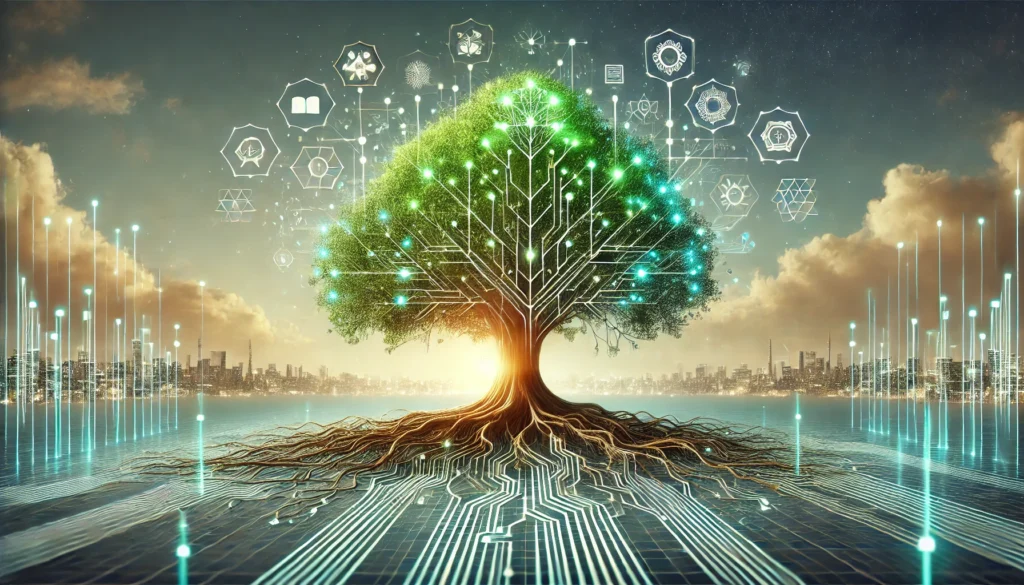
Enter the Visionary Prompt Framework (VPF), which reimagines soil as an intelligent archive of planetary and cosmic processes. Unlike narrow AI models, VPF weaves multiple intelligences Natural, Planetary, Cosmic, Indigenous, Ancestral, and the Unknown into a holistic system for breakthrough insights (MyJoyOnline, 2025). For mineral exploration, its Natural, Planetary, and Cosmic chambers stand out.
Natural Intelligence: Decoding the Earth’s Living Logic
Soil isn’t static; it’s a dynamic record of tectonics, weathering, volcanism, and biology. VPF’s Natural Intelligence Chamber reads these as systemic signals, not isolated data points. In Ghana, this means probing beyond the Birimian greenstone belts home to most of the country’s 4.8–4.9 million ounces of gold produced in 2024 (U.S. Geological Survey, 2025; national industry data). Deeper horizons and untapped zones could yield gold, lithium, manganese, and rare earths, reducing reliance on surface digs.
Planetary Intelligence: Lessons from Cosmic Forges
Earth’s minerals gold, platinum, cobalt were born in stellar hearts and shaped by planetary dynamics. VPF applies insights from other worlds to predict deposits under Ghana’s geological shields, pinpointing layered intrusions without endless drilling.
Cosmic Intelligence: Beyond Earthly Datasets
This chamber factors in stellar nucleosynthesis, meteorite data, and solar system analogues, modeling deep structures overlooked by standard AI. In patchy survey zones, it offers probabilistic maps with confidence intervals, slashing exploration risks.
Ghana, a top gold producer with one million ounces annually from known sites, stands to gain immensely (U.S. Geological Survey, 2025). VPF could empower the Geological Survey Department, universities, and mining ministries to build sovereign intelligence platforms interpreting data through plural lenses for actionable, low-risk insights.
This isn’t theory; it’s an operational imperative for Ghana to leap from exporter to powerhouse, attracting ethical investment while honoring soil’s complexity.
A Direct Call to the Ghana Gold Board
The Ghana Gold Board, under CEO Lawyer Sammy Gyamfi, must prioritize VPF. As the custodian of the nation’s gold strategy, the Board can lead studies, pilot implementations, and partnerships with research institutions. Mandate geological surveys to integrate VPF models, fund university trials on Birimian deep structures, and develop national platforms blending local data with cosmic insights. These steps would secure Ghana’s mineral future, boost revenues, create jobs, and position Mother Ghana as a global leader in intelligent exploration. Lawyer Gyamfi: the soil speaks it’s time to listen with VPF.
By Doe Benjamin Kofi Lawson