
John Dramani Mahama has announced a significant shift in Ghana’s trade policy, declaring that the country will prioritize value addition and industrial processing over the continued export of raw agricultural commodities.
Speaking at the opening of the four-day Tree Corps Investment Fair and Exhibition in Accra on Tuesday, February 17, the President made it clear that Ghana must move beyond exporting raw cashew, raw shea, and unprocessed rubber.
According to him, it is no longer economically sustainable for the country to ship out these commodities in their raw state, only to import finished products at far higher prices.
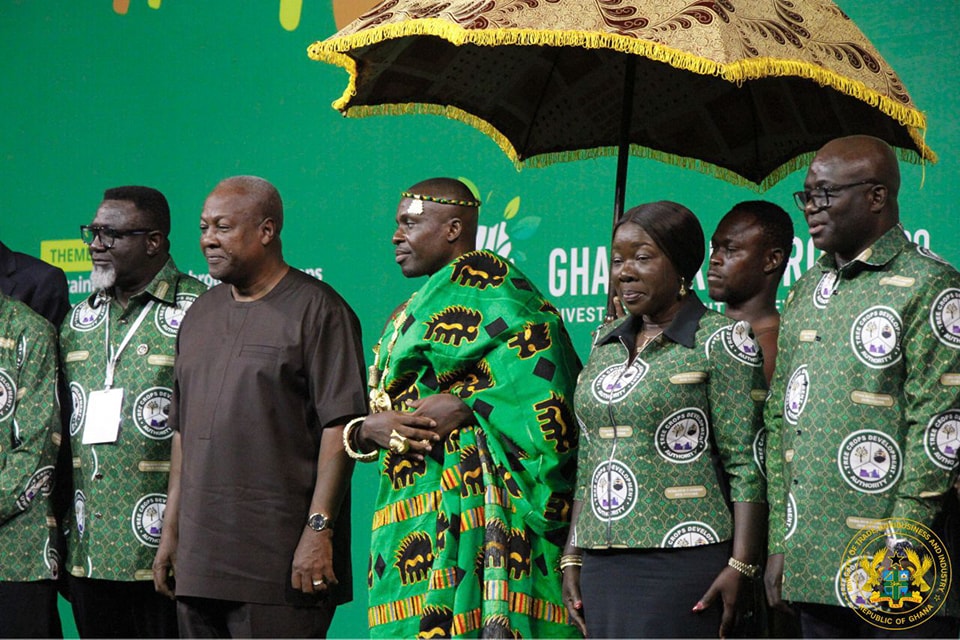
A New Trade Direction
The President described the policy shift as a deliberate move to strengthen local manufacturing capacity, deepen industrialization, and retain more value within the Ghanaian economy.
Under the new direction:
- Export of raw cashew, shea, and rubber will be discouraged
- Local processing industries will be prioritized
- Investments in agro-processing and manufacturing will be expanded
- Jobs are expected to be created along the value chain
He stressed that Ghana must fully benefit from its natural resources by processing them locally before export, rather than serving as a supplier of raw materials to foreign industries.
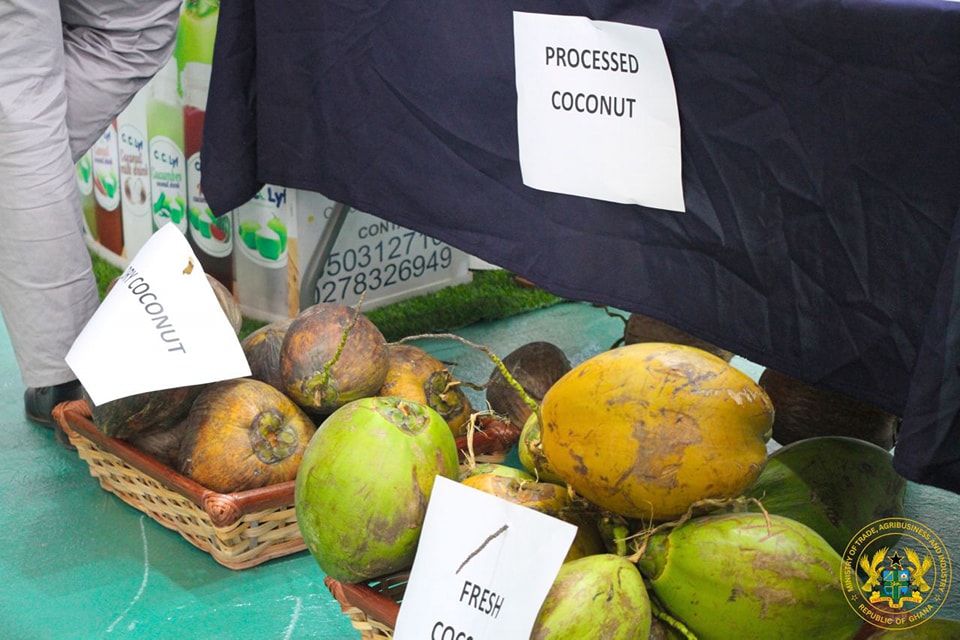
Economic Implications
The shift is expected to:
- Boost domestic industries
- Create employment opportunities, especially for the youth
- Increase export earnings from finished and semi-finished products
- Reduce dependency on imported processed goods
The Tree Corps Investment Fair and Exhibition provides a platform for investors, policymakers, and industry players to explore opportunities within Ghana’s forestry and agribusiness sectors.

The Minister for Trade, Agribusiness and Industry, who was present at the opening ceremony, is scheduled to address the fair on Thursday, February 19, where further details of the government’s industrial strategy are expected to be outlined.
Looking Ahead
The announcement signals a broader push toward economic transformation through industrialization. If effectively implemented, the policy could mark a turning point in Ghana’s long-standing reliance on raw commodity exports.
Stakeholders across the agribusiness and manufacturing sectors will now be watching closely to see how quickly policy translates into concrete action.
Story by Doe Benjamin Kofi Lawson