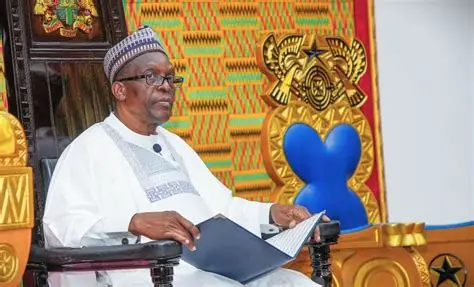
The Speaker of Parliament, Alban Sumana Kingsford Bagbin, has called for deliberate consensus-building to dismantle Ghana’s winner-takes-all political culture, warning that it fuels policy reversals and delays national development.
Speaking at the launch of a political inclusion and consensus-building project in Accra, Mr Bagbin argued that durable national reforms—ranging from economic recovery programmes to constitutional changes—are achieved through negotiation and shared ownership, not unilateral party dominance. He cautioned that electoral victory should not be mistaken for total authority, stressing that while majorities govern, consensus sustains democracy.
According to the Speaker, winner-takes-all governance breeds cynicism, policy discontinuity and public frustration, with citizens bearing the cost. He expressed confidence that the new project would strengthen dialogue and cooperation so that national priorities endure beyond electoral cycles.
The initiative aims to deepen cross-party engagement in Parliament, promote issue-based collaboration, and expand inclusive participation—particularly for women and young people. Targeted mainly at emerging political leaders, the project also seeks to reduce polarisation and institutionalise dialogue beyond elections. It is being implemented by the African Centre for Parliamentary Affairs with support from the Switzerland Department of Foreign Affairs.
Mr Bagbin said democracy is strongest when all voices feel respected, not only those who win elections. Quoting James Kwegyir Aggrey, he likened inclusive governance to musical harmony—achieved by blending differences rather than excluding them. He warned that political exclusion breeds mistrust and instability, while inclusion strengthens legitimacy and unity.
The Speaker further emphasised Parliament’s role in modelling respectful discourse, noting that political conduct shapes societal behaviour. He urged lawmakers to replace provocation with persuasion and ensure debates illuminate rather than inflame.
The Swiss Ambassador to Ghana, Simone Giger, said rising global polarisation has weakened public trust in institutions, making consensus-building essential. She noted that the project would work through political parties and Parliament, with a strong focus on young politicians and women as future leaders.
Minority Leader Alexander Afenyo-Markin said Ghana’s closely divided Parliament reflects political plurality, making negotiation indispensable. He urged political rivals to act as constitutional partners in the national interest through respectful and civil engagement.
Majority Leader Mahama Ayariga disclosed that parliamentary leadership has instituted a rule requiring committees to engage civil society on policy work, with reports rejected if such inputs are absent an effort to entrench inclusive democracy and improve outcomes.
Sheila Otuo – Baffour