The Minority in Parliament has raised concerns over the reported financial performance of the Bank of Ghana (BoG) for the 2025 financial year, arguing that the institution’s real losses are significantly higher than officially stated.
While the central bank has disclosed an operating loss of GH¢15.6 billion, the Minority insists the figure does not reflect the full scale of the financial shortfall.
Rising Deficits Over Four Years
According to the BoG’s 2025 Annual Report and Financial Statements, the central bank has now recorded four consecutive years of losses:
- 2022: GH¢60.9 billion
- 2023: GH¢10.5 billion
- 2024: GH¢9.48 billion
- 2025: GH¢15.6 billion (reported operating loss)
Despite the downward trend from the 2022 peak, the institution continues to operate in deficit.
Minority Questions Accounting Treatment
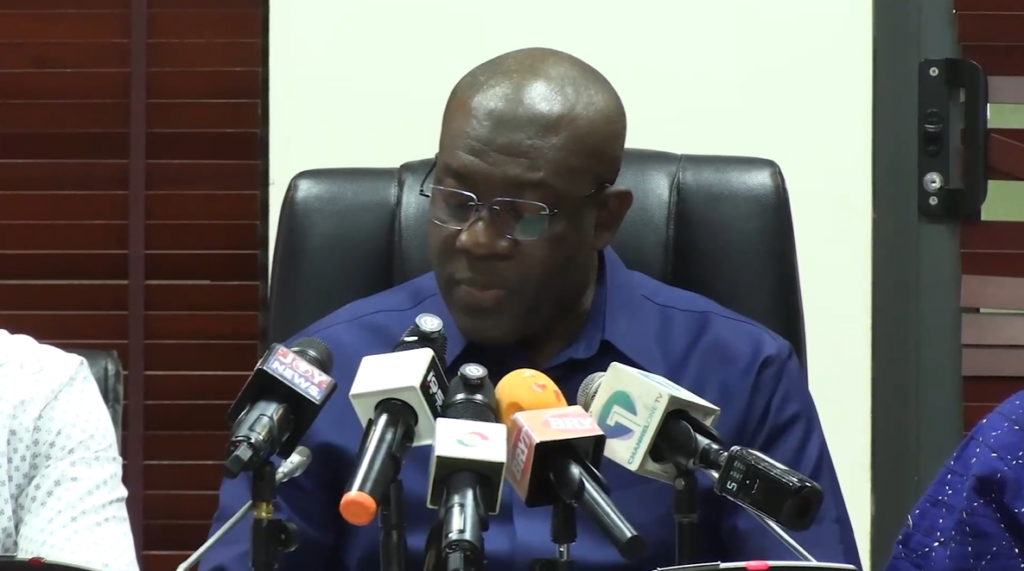
At a press briefing on Sunday, May 3, Minority spokesperson Kojo Oppong Nkrumah, Member of Parliament for Ofoase-Ayirebi, challenged the official figures, accusing the central bank of using accounting adjustments that obscure the true scale of losses.
He argued that portions of the deficit were shifted into “other comprehensive income,” which, in his view, reduces the visibility of the actual operating loss.
“True Loss” Estimated at GH¢34.9 Billion
Mr. Oppong Nkrumah claimed that the actual financial position of the central bank shows a much deeper deficit than reported.
“The government says the loss is GH¢15.6 billion. The true operating loss of the Bank is actually GH¢34.9 billion,” he stated.
He further explained that when proceeds from gold sales are adjusted for, the overall financial position worsens significantly.
According to his calculations, factoring in approximately GH¢9.6 billion in gold sale proceeds results in a recalculated total loss of about GH¢44 billion.
Praise and Criticism
Despite the disagreement over figures, the Minority commended the Bank of Ghana for what they described as improved transparency in publishing its financial statements.
However, they insisted that transparency must be matched with accurate representation of the institution’s true financial position.
Broader Concerns Over Central Bank Finances
The debate adds to ongoing public scrutiny of the central bank’s financial health following successive years of losses.
Analysts note that persistent deficits at the BoG raise broader questions about:
- Monetary policy costs
- Currency stabilisation interventions
- The sustainability of central bank recapitalisation efforts
Conclusion
As the figures continue to generate political and economic debate, attention is now shifting to whether the government and central bank will provide further clarification on the accounting methodology behind the reported losses.
For now, the gap between the official narrative and Minority interpretation underscores a deeper dispute over how Ghana’s central bank balance sheet should be understood.
Story by Sheila Otuo – Baffour