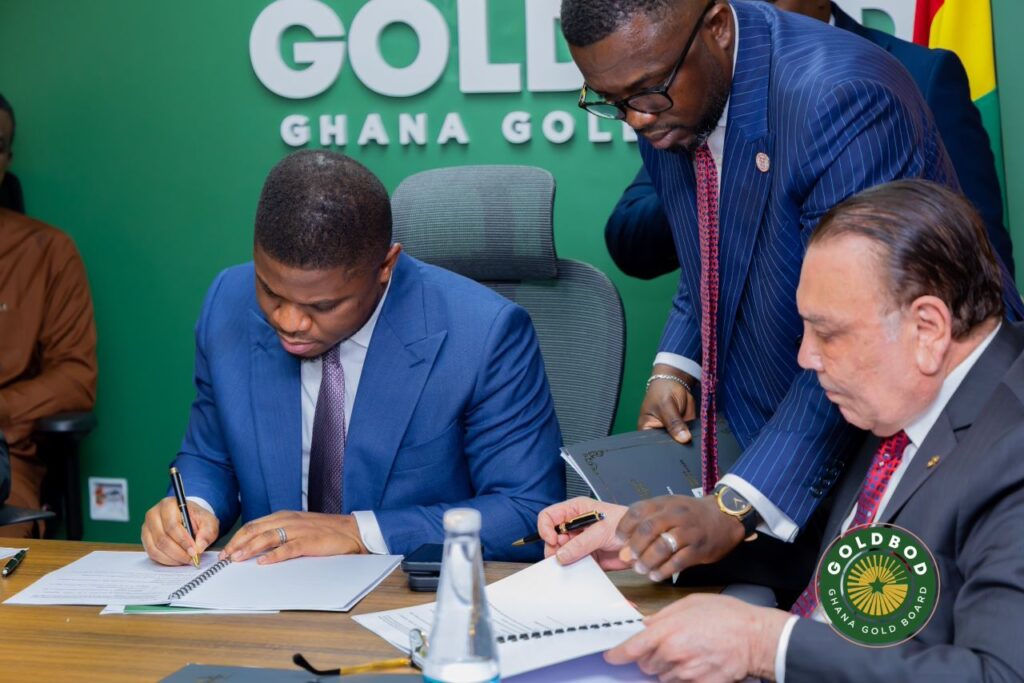
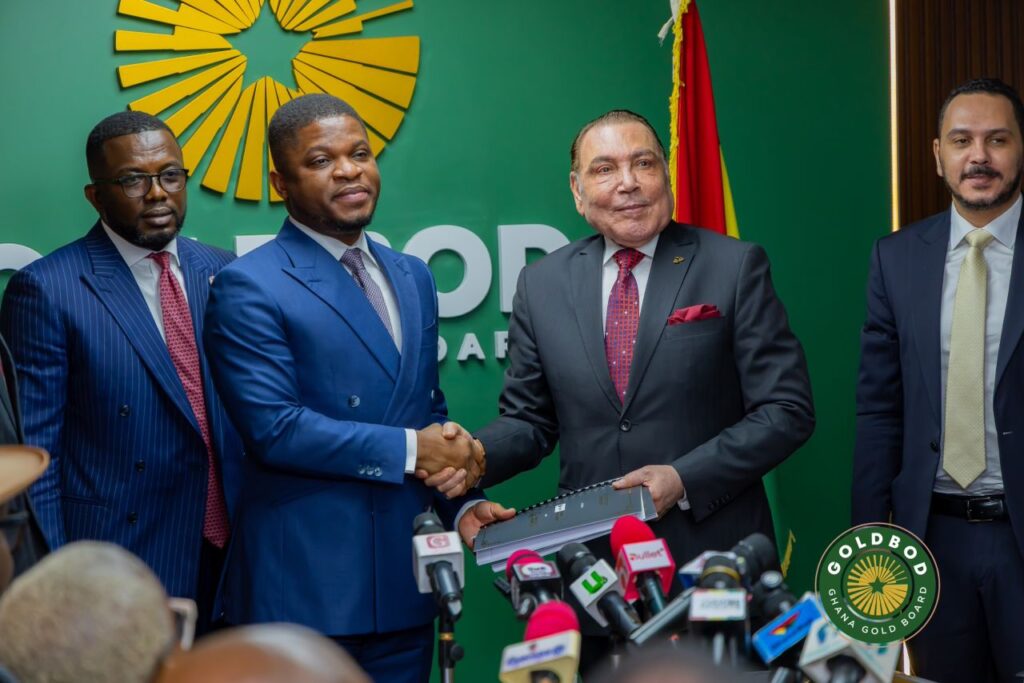
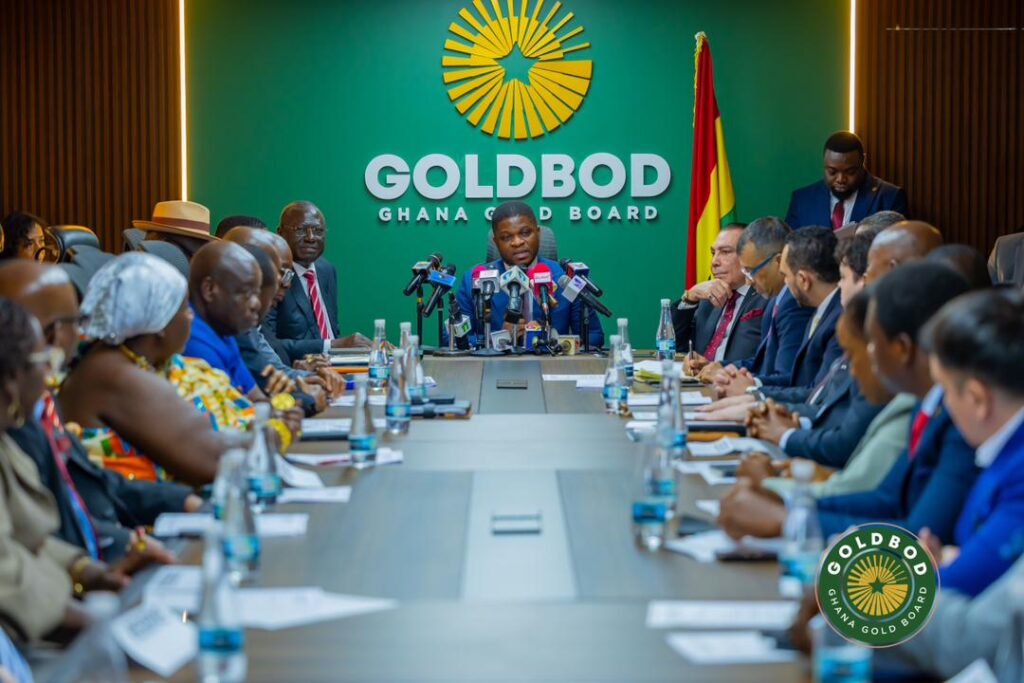
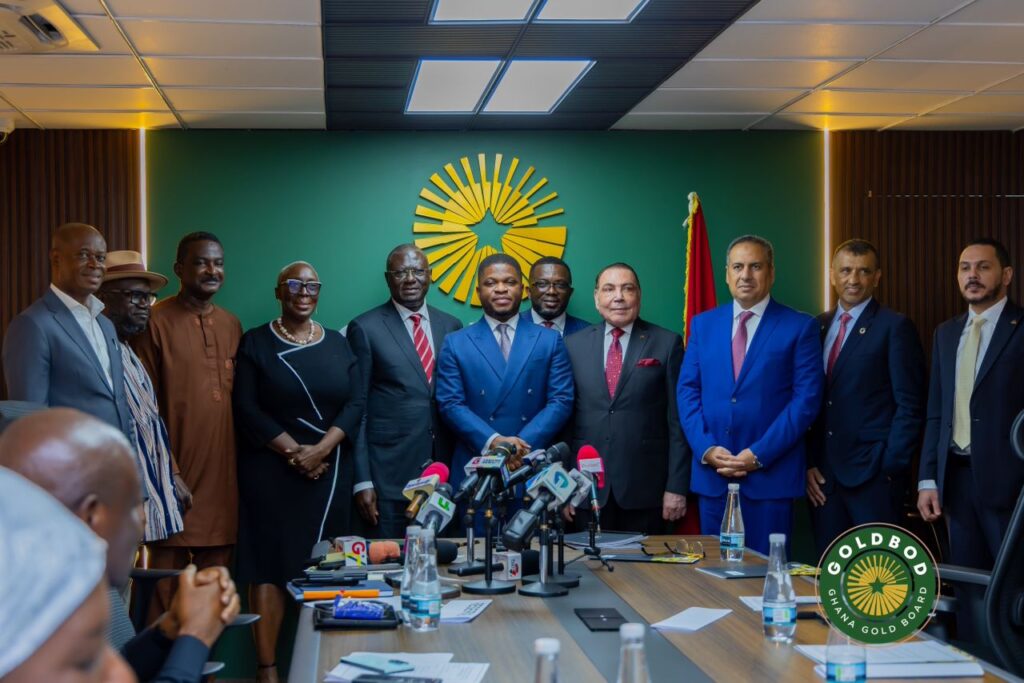
Accra, Ghana – The Ghana Gold Board (GoldBod) has signed a historic gold refining agreement with Gold Coast Refinery, marking a major step toward local value addition, job creation, and increased national revenue from Ghana’s gold resources.
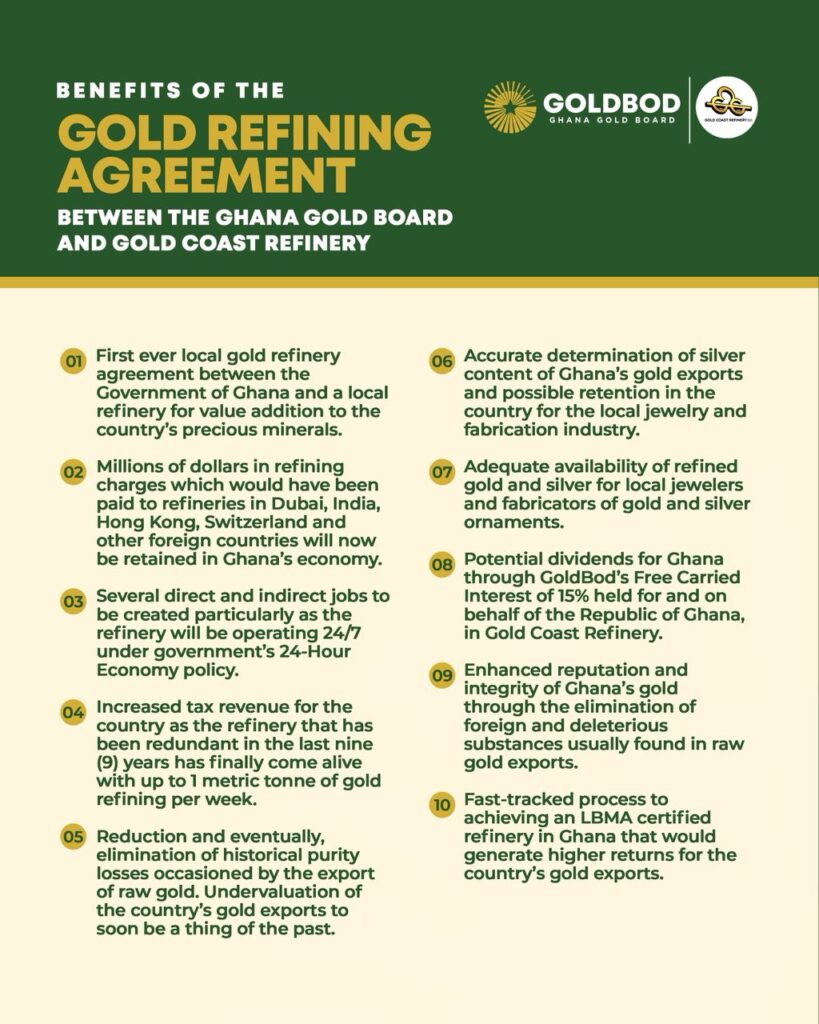
The agreement represents the first time the Government of Ghana has entered into a formal local gold refining arrangement with a domestic refinery, ending decades of dependence on foreign refineries in countries such as Dubai, India, Switzerland, and Hong Kong.
Under the deal, significant amounts previously spent on offshore refining charges, running into millions of dollars, will now be retained within the Ghanaian economy. This is expected to strengthen foreign exchange inflows and improve overall economic value derived from gold exports.
The partnership is also projected to create several direct and indirect jobs, particularly as the refinery is set to operate on a 24-hour basis in line with government’s 24-Hour Economy policy. The refinery, which had remained dormant for nearly nine years, has been revived and is now capable of refining up to one metric tonne of gold per week.
In addition to employment benefits, the agreement is expected to boost government revenue through increased tax receipts and dividends. GoldBod holds a 15 percent free carried interest in Gold Coast Refinery on behalf of the Republic of Ghana, positioning the state to benefit directly from the refinery’s operations.
The deal is also expected to significantly reduce losses associated with the export of raw gold, including historical purity losses and under-valuation. By refining gold locally, Ghana will achieve more accurate determination of gold and silver content, ensuring fairer pricing and higher export returns.
Local jewellers and fabricators are also set to benefit, as the agreement guarantees improved access to refined gold and silver for domestic use, supporting the growth of Ghana’s jewellery and fabrication industry.
Furthermore, refining gold locally is expected to enhance the reputation and integrity of Ghana’s gold exports by eliminating harmful and foreign substances commonly found in unrefined gold shipped abroad.
The agreement also fast-tracks Ghana’s efforts to secure London Bullion Market Association (LBMA) certification for a local refinery, a move that would further increase the global competitiveness and value of Ghana’s gold exports.
Stakeholders say the agreement represents a strategic shift from raw mineral exports to value-added processing, positioning Ghana to derive greater long-term benefits from its mineral resources.
Story by Doe Benjamin Kofi Lawson