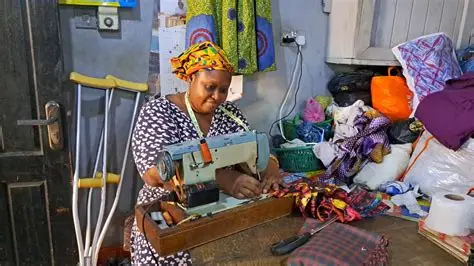
Women living with physical disabilities in Ghana continue to face severe hardship, discrimination and social stigma despite national laws intended to safeguard their rights.
Data from the Ghana Statistical Service indicate that about eight percent of Ghana’s population lives with some form of disability, with the prevalence higher among women at 8.8 percent compared with 6.7 percent among men.
The figures translate into hundreds of thousands of women across the country living with physical or other forms of disability.
Experts say these women often face multiple layers of disadvantage, ranging from limited access to education and employment to social exclusion and discrimination.
Poverty and limited opportunities
Research shows that women with disabilities in Ghana are more likely to experience poverty than many other groups in society.
Studies indicate that a large proportion of women with disabilities are engaged in vulnerable or informal work, often relying on petty trading, street hawking or begging for survival.
Limited access to education contributes significantly to this challenge. Reports show that fewer women with disabilities attain secondary or higher education compared to men with disabilities, a gap that affects their chances of securing stable employment.
Analysts say the disparity partly stems from long-standing social attitudes that underestimate the capabilities of persons with disabilities, particularly women.
In many households facing financial difficulties, families may prioritise schooling for able-bodied children, leaving girls with disabilities with fewer educational opportunities.
Stigma and discrimination
Beyond economic hardship, stigma remains one of the most persistent challenges.
In some communities, disability is still associated with spiritual punishment, curses or misfortune, beliefs that contribute to discrimination and social isolation.
Women with disabilities are sometimes viewed as incapable of marriage or childbearing, which can lead to rejection by potential partners and marginalisation within their own families.
Advocacy groups also warn that women with disabilities face higher risks of sexual violence and abuse, largely because of social vulnerability and limited protection systems.
Barriers to healthcare and public services
Access to healthcare and other public services is another major obstacle.
Many health facilities, transport systems and public buildings in Ghana are still not disability-friendly, making it difficult for women with mobility challenges to access services independently.
For some women, the lack of ramps, accessible transport and supportive infrastructure means relying heavily on relatives or friends for basic movement.
Advocates say such barriers undermine the dignity and independence of persons with disabilities.
The gap between policy and reality
Ghana’s Persons with Disability Act, 2006 (Act 715) was enacted to guarantee equal access to education, healthcare, employment and public services.
However, disability rights organisations say enforcement of the law remains inconsistent, leaving many persons with disabilities without the protection and opportunities the legislation envisioned.
They are therefore calling for stronger implementation of disability policies, inclusive education programmes and employment initiatives aimed at empowering persons with disabilities.
A call for inclusion
Advocates argue that addressing the challenges faced by women with disabilities requires a shift in public attitudes as well as sustained policy action.
According to them, investing in education, accessible infrastructure and economic opportunities for women with disabilities will not only improve their quality of life but also strengthen Ghana’s broader development agenda.
For many physically challenged women in Ghana, the struggle goes beyond living with a disability.
It is also a fight against stigma, poverty and social exclusion in a society that is still learning to fully embrace inclusion.
Story by Doe Benjamin Kofi Lawson